
SmartSetDesign
Site for an interior design studio.
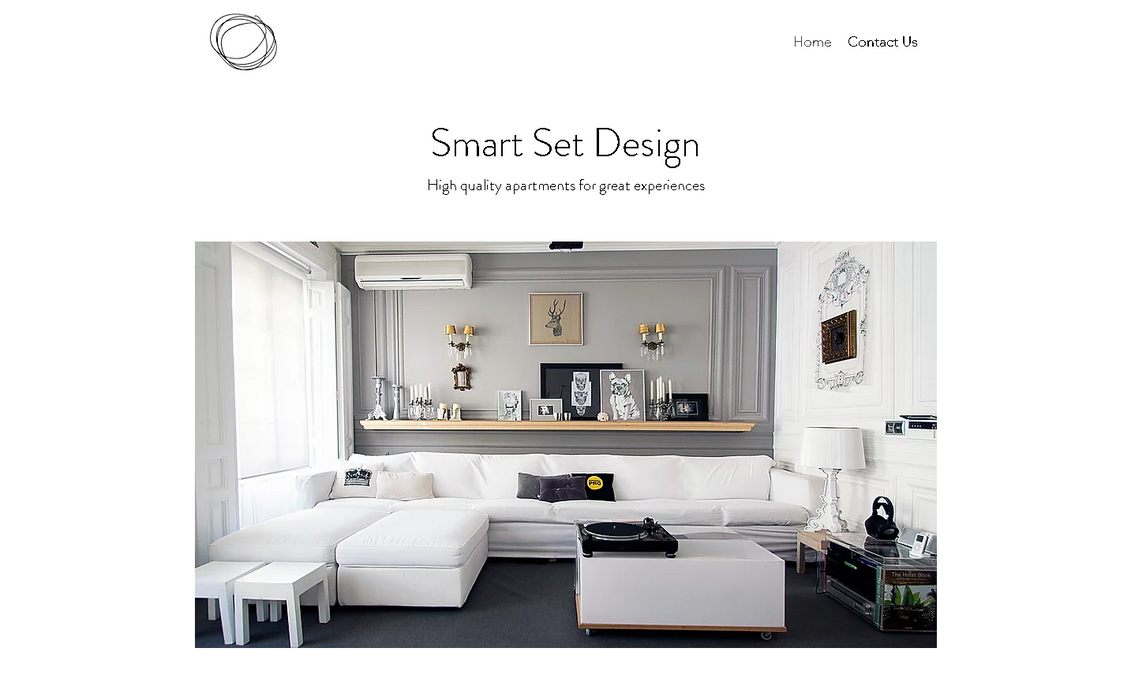
At a glance
| Client | SmartSetDesign |
|---|---|
| Project type | Corporate website |
| Duration | 3 weeks |
| Tec2020 team | 1 developer |
| Tech | Wix |
| Client website | smartsetdesign.com |
The challenge
SmartSetDesign is an interior design studio: residential and commercial projects, site management, materials and finishes selection. In this craft the prospect largely decides with their eyes — a good project enters through a photograph, not through a paragraph. The site, accordingly, does two jobs: show the portfolio with the fidelity it deserves (well-shot spaces, editorial photography, zero visual noise) and convert the visitor into an initial conversation without herding them into a funnel.
The brief came with an operational constraint: the studio updates the portfolio when a project finishes, not when the developer has time. Anything that required a deployment cycle to add a new project was out from the start.
What we built
- Site on Wix with a customised template tailored to the studio’s style — typography, grid and palette built for the photography to breathe.
- Per-project portfolio: each space with its own page (client, location, year, type) and a full-bleed editorial gallery, comfortable to navigate on mobile.
- Services page with the studio’s offer in clear language — what they do, in which phases they engage, the kind of client they work with.
- Direct contact: short form + email + phone visible, no funnel friction.
- Editor in the studio’s hands: adding a new project is duplicating a card, swapping photos and publishing — without going through development.
- Hosting, certificate and backups included in the platform — the studio doesn’t maintain infrastructure.
Technical decisions that mattered
1. Wix, not a custom CMS
For a studio with no internal technical team, building a custom WordPress or an Astro/Next site with a custom panel is choosing a recurring maintenance cost dressed up as "control". Wix handles hosting, certificate, backups, visual editor and updates for a flat fee — and frees the studio from all of it. The rule here: maintenance cost is part of total site cost, not a footnote.
2. The template lets photography take centre stage
Neutral typography, lots of air, restrained animations. The site doesn’t compete with the projects for the visitor’s attention: it frames them. It’s the least visible decision and the one that makes the most difference in this niche — a well-presented portfolio in a sober wrapper reads as a serious studio; the same portfolio inside a busy template disqualifies the studio before you open a project.
3. Editorial autonomy from day one
Adding a new project is duplicating the previous card, swapping photos and publishing — a flow anyone who has used a visual editor already knows. The site stays current at the studio’s pace, not at the developer’s.
Outcome
SmartSetDesign has a site that does its double job — show the portfolio with fidelity and open conversations with prospective clients — without asking the studio for more time than they have. The platform updates whenever a project finishes, not waiting for a "refresh" every two years. And the most underrated decision in hindsight: not having built a custom CMS. What for a large studio would be reasonable, for a small studio is a maintenance burden charged every month.
Let’s talk about yours.
If you have an idea or a stuck technical project, the first call is free and lasts thirty minutes. Maybe something comes of it, maybe not — but you’ll know more by the time we hang up.
Let’s talk →