
MariaRoig
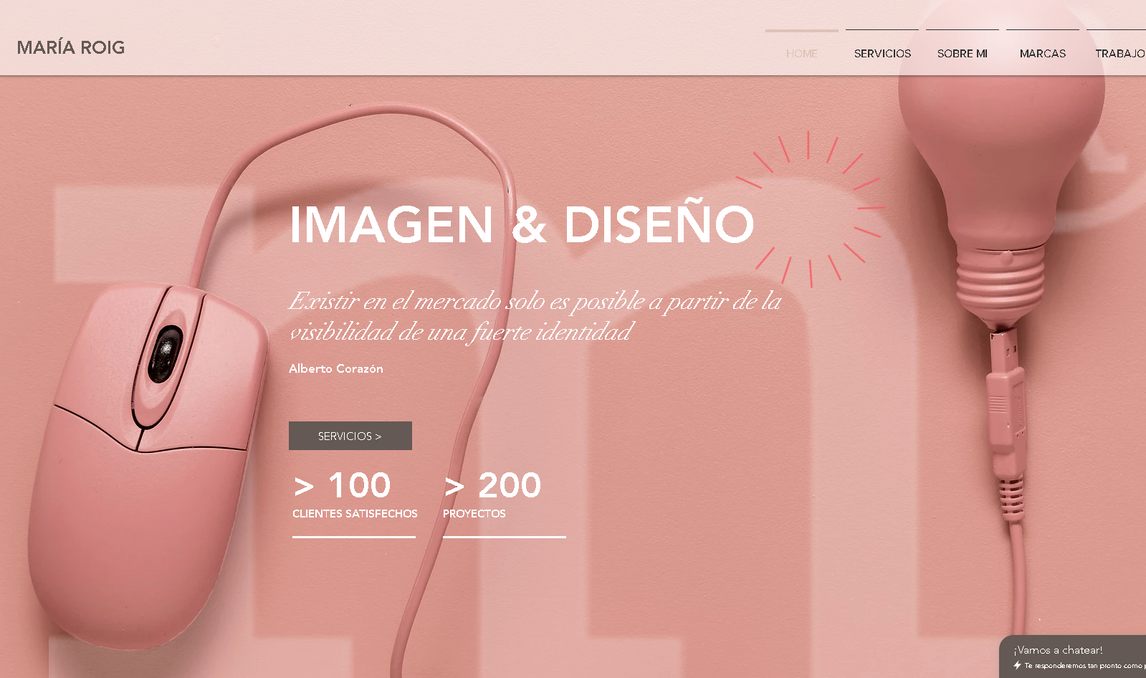
Site for an independent graphic design studio.
At a glance
| Client | MariaRoig |
|---|---|
| Project type | Corporate website |
| Duration | 3 weeks |
| Tec2020 team | 1 developer |
| Tech | Wix |
| Client website | mariaroig.com |
The challenge
MariaRoig is an independent graphic design studio: identities, editorial, packaging, art direction. In this craft, the website does two jobs at once — and they tend to fight each other: it has to sell the studio (the prospective client should understand in thirty seconds what it does and why it would fit them) and it has to be the studio (the site itself should be a piece of design coherent with the portfolio it shows). A pretty site with flat copy sells little; a clear but ugly site disqualifies the studio before you open a project.
The brief was to solve both with minimal operational friction. MariaRoig designs — she doesn’t want to maintain a website. Anything that required touching code to publish a new project was out.
What we built
- Site on Wix with a customised template: typography, grid and palette designed so the content — the projects — is the protagonist, not the chrome.
- Per-project portfolio: each project with its own page (client, piece type, year, full-bleed photography), one-handed navigation on mobile.
- Studio page with the value proposition without ornament — who, how, with what kind of clients — for the visitor arriving with a "why".
- Direct contact: short form + visible email, no funnels.
- Editor in the client’s hands: adding a new project is duplicating a card, swapping images and publishing — without going through development.
Technical decisions that mattered
1. Wix, not a custom CMS
For a one-person studio, building a custom WordPress or an Astro/Next site with a custom panel is a romantic choice that gets paid every time you have to update a plugin, renew a certificate or work out why the editor is down. Wix handles hosting, certificate, backups, visual editor and updates for a flat fee — and frees MariaRoig from all of it. The rule here: maintenance cost is part of total site cost, not a footnote.
2. The template lets the portfolio take centre stage
Neutral typography, generous grid, lots of white, restrained animations. The site doesn’t compete with the projects for the visitor’s attention: it frames them. It’s the least visible decision and the one that makes the most difference in this niche — a well-presented portfolio in a sober wrapper reads as serious work; the same portfolio inside a busy template reads as amateur, even if it’s identical.
3. Editorial autonomy from day one
The client doesn’t call us to publish a new project. Adding a new card is duplicating the previous one, swapping images and publishing — a flow anyone who has used a visual editor already knows. Result: the site stays current with no recurring cost.
Outcome
MariaRoig has a site that does its double job — it sells the studio and is the studio — without asking the client for more time than she has. The platform updates whenever a new project comes in, not waiting for a "refresh" every two years. And the most underrated decision in hindsight: not having built a custom CMS. What for a hundred-person studio would be reasonable, for a one-person studio is a maintenance burden charged every month.
Let’s talk about yours.
If you have an idea or a stuck technical project, the first call is free and lasts thirty minutes. Maybe something comes of it, maybe not — but you’ll know more by the time we hang up.
Let’s talk →